

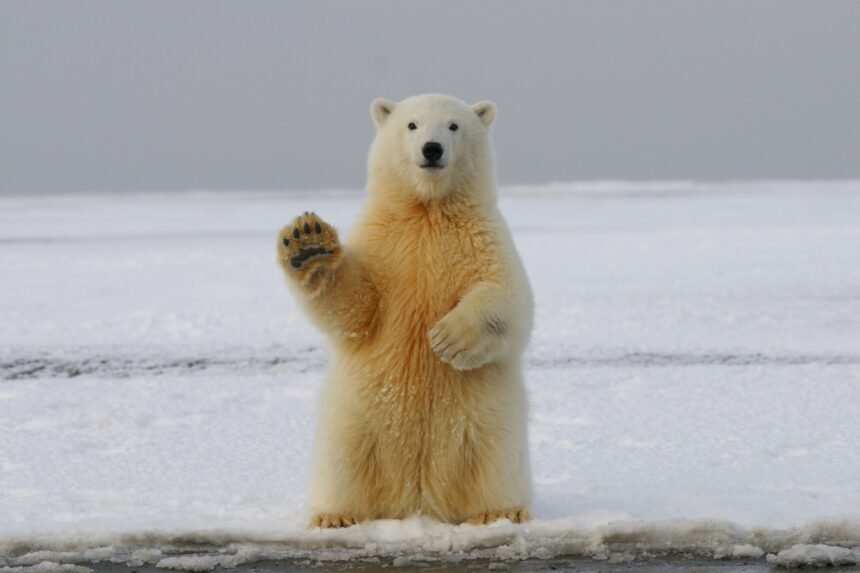
Polar bears command the frozen north as Earth’s largest land carnivores, their white fur and massive paws icons of icy survival. These 1,000-pound behemoths navigate sea ice with unmatched prowess, but warming climates test their resilience. From remote habitats to hunting habits, uncover the truths behind these majestic survivors.
Where Do Polar Bears Live? Mapping Their Arctic Realm
Polar bears inhabit the circumpolar Arctic, circling the North Pole across five nations: Canada, Russia, Greenland, Norway’s Svalbard, and Alaska. They claim sea ice over continental shelves as prime turf, from Hudson Bay to the Chukchi Sea. No true land dwellers, they roam pack ice, landfast edges, and coastal zones during ice-free summers.
Canada hosts 60 percent of the 22,000-31,000 worldwide, divided into 19 subpopulations like Southern Beaufort and Kane Basin. Ranges span millions of square kilometers, shifting with ice—expanding winters, retreating summers force onshore waits. Alaska sees them along northern coasts, especially Beaufort and Chukchi seas, with sightings near Barrow.
Harsh conditions define home: perpetual cold, endless ice, minimal human overlap until now.
What Do Polar Bears Eat? Seals Top the Menu
Ringed and bearded seals dominate polar bear diets, providing blubber-rich meals vital for fat reserves. Females punch breathing holes, waiting patiently; males ambush from above. One 100-pound seal sustains an adult two weeks, fueling 10,000 calories daily needs.
Opportunistic feeders snag beluga whales, walrus pups, birds, eggs, kelp—even garbage near settlements. Cubs learn on smaller prey like eiders. Scavenging sustains lean summers when ice vanishes.
Hunting peaks March-May on annual ice; longer melts mean fasting, shrinking body mass 20-30 percent yearly.
Are Polar Bears Endangered? A Vulnerable Status Explained
Polar bears hold vulnerable status from IUCN, threatened under the U.S. Endangered Species Act since 2008. Of 19 subpopulations, four decline sharply, eight stable, three increasing, five data-deficient. Global numbers hold around 26,000, but sea ice loss projects 30 percent drop by 2050.
Primary culprit: Arctic warming melts habitat twice summer ice extent since 1980. Cubs starve as mothers can’t hunt; adults roam farther, clashing with humans. Oil spills, shipping, and toxins compound risks.
Alaska’s Southern Beaufort subpopulation plunged 40 percent in the 2000s to under 900; Chukchi stable but pressured.
Are There Polar Bears in Alaska? Yes, Along the North Coast
Alaska harbors key populations in the Southern Beaufort Sea (shared with Canada) and Chukchi Sea (with Russia). Concentrated near Utqiaġvik (Barrow), they den on coastal barrier islands, hunt offshore ice. Sightings spike fall as bears head seaward.
No inland roamers—stick to marine edges. Conflicts rise with offshore oil; communities report more onshore bears during ice-free months. USGS tracks via collars, noting shifts to land.
Do Polar Bears Hibernate? Only Pregnant Females Do
Unlike brown bears, most polar bears skip full hibernation. Active hunters stay on ice year-round. Pregnant females alone den up to eight months in snow caves on land or islands, fasting on fat while birthing 1-3 cubs weighing one pound each.
Emerging March-April, families hit ice for seal feasts. Males and non-pregnant females roam, diving under ice, swimming 100 miles nonstop. Summer fasts mimic torpor—metabolism slows, but they stir for food.
This adaptation suits nomadic ice life, but vanishing platforms disrupt rhythms.
Physical Powerhouses: Adaptations for Ice Mastery
Thick blubber insulates against -50°F chills; black skin absorbs sun under translucent fur. Paws span 12 inches for swimming (six mph) and traction; claws grip ice. Keen smell detects seals 20 miles away; powerful jaws crush bone.
Lifespan: 20-30 years wild. Solitary except mothers-cubs or mating pairs.
| Subpopulation | Status | Approximate Size |
|---|---|---|
| Southern Beaufort | Declining | ~900 |
| Chukchi Sea | Stable | ~2,900 |
| Western Hudson Bay | Declining | ~600 |
| Svalbard/Barents | Increasing | ~2,600 |
| Kane Basin | Increasing | ~170 |
Cubs and Family Life: Raising the Next Generation
Born January-February in maternity dens, blind cubs nurse high-fat milk, tripling weight monthly. Families emerge spring, mothers teaching hunts till separation at 2.5 years. Only 50 percent survive to adulthood amid predators, starvation.
Playful wrestling builds strength; weaning hits one year.
Conservation Efforts: Halting the Ice Melt Crisis
Polar Bear Agreement (1973) curbs hunting; quotas protect subpopulations. Groups like Polar Bears International fund patrols, research, maternal den protection. Circumpolar Action Plan targets 35 percent habitat preservation by 2030.
Communities adopt bear-proof trash; eco-tourism generates funds. Reduce emissions—key to ice restoration.
Fascinating Polar Bear Facts to Share
- Swim 400 miles nonstop.
- Fur appears white but clear, scattering light.
- Males fight brutally for mates with neck bites.
- World’s largest bear—10 feet tall standing.
Ways to Support Polar Bears Right Now
Donate to WWF or Polar Bears International for collar tech, anti-poaching. Cut plastics polluting Arctic food chains. Advocate clean energy policies. Visit ethical exhibits; educate locals.
Spread stories—these icons need voices. Act today for tomorrow’s ice.
Polar bears symbolize Arctic fragility. Their fate hinges on collective will. Learn, advocate, preserve—the north’s guardians endure.