

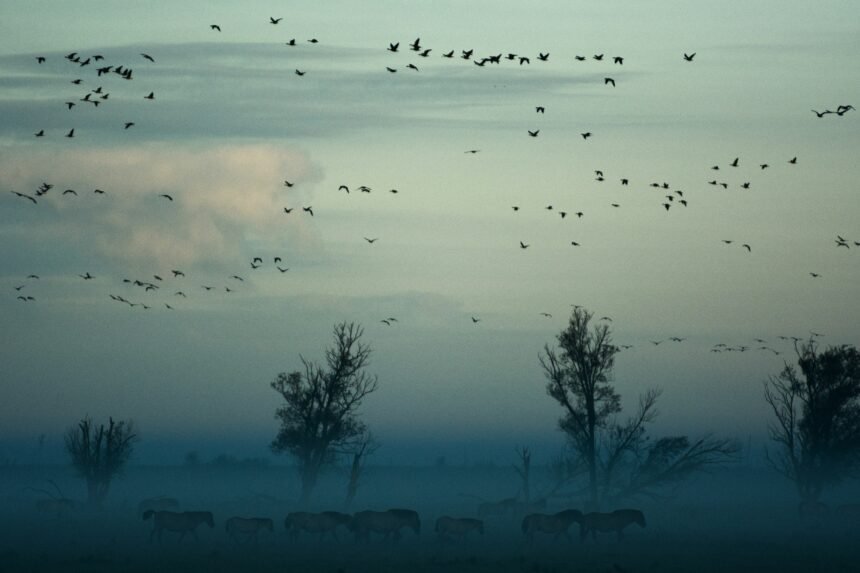
One of the most common biology questions people ask is whether feathered creatures belong to the mammal category. The straightforward answer: no, they don’t. Yet this question persists because these two animal groups share surprising similarities—both maintain body heat internally, care for their young, and possess complex brains. Understanding why they’re classified separately requires examining their fundamental biological differences and evolutionary histories.
Understanding Animal Classification Systems
Before diving into what separates these groups, it’s essential to understand how scientists organize the animal kingdom. Taxonomy is the branch of biology dedicated to naming and classifying organisms based on their evolutionary history and physical characteristics. Scientists use a hierarchical ranking system that moves from broad categories to increasingly specific ones.
The major ranks include Kingdom, Phylum, Class, Order, Family, Genus, and Species. Within the animal kingdom, organisms are sorted into different classes based on shared characteristics that developed through millions of years of evolution. Both feathered creatures and mammals belong to the vertebrate phylum—meaning they possess backbones—but they occupy entirely different classes.
Feathered animals belong to the class Aves, while mammals belong to the class Mammalia. This fundamental classification difference means they followed separate evolutionary paths for over 300 million years since their last common ancestor.
Why Scientists Created Separate Categories
The scientific community didn’t arbitrarily decide to place these animals in different categories. Each class shares a combination of distinctive traits that became fixed through evolution. These characteristics are so fundamental that they define each group’s entire structure, behavior, and reproduction strategy.
Key Defining Characteristics of Mammals
Mammals possess several distinctive features that appear across all living species in this class. Understanding these traits clarifies why scientists place so many animals into this category—from tiny shrews to massive whales—but keep feathered creatures out.
Hair and Fur Coverage
Every single mammal has some form of hair or fur somewhere on its body, even if it’s not immediately obvious. Dolphins and whales, for instance, possess hair at birth that sometimes disappears as they mature, yet they retain hair follicles throughout life. This characteristic is absolutely universal among mammals and appears nowhere else in the animal kingdom.
Milk Production for Offspring
The most uniquely defining feature of mammals is their capacity to produce milk from mammary glands. Female mammals use this specialized milk to nourish their young. No other animal group possesses this ability. The word “mammal” itself derives from “mammary”—referring directly to this signature trait.
Live Birth
Virtually all mammals give birth to living, breathing offspring rather than laying eggs. The developing baby grows inside the mother’s body, receiving nutrition through the placenta. Once born, the newborn is typically more developed than the eggs of other animal groups. This reproductive strategy allows mothers to protect developing offspring inside their bodies, a significant evolutionary advantage.
Advanced Brain Structure
Mammals possess a unique brain region called the neocortex, which handles complex functions including decision-making, sensory perception, and memory formation. This brain component evolved specifically in the mammal lineage and remains absent in other vertebrate classes.
Additional Structural Features
Mammals also have three tiny bones in the middle ear (called ossicles) that enhance hearing, a single lower jaw bone, and a diaphragm that assists breathing. These internal structures, invisible without specialized examination, nonetheless define the mammalian body plan.
What Makes Feathered Creatures Distinct
Feathered animals possess an equally distinctive set of characteristics that makes them fundamentally different from mammals. Some features are visible at a glance; others require closer biological examination.
Feathers as the Signature Feature
Feathers represent the defining characteristic of the Aves class. No other living animal has true feathers. This remarkable innovation serves multiple purposes: insulation, waterproofing, and flight capability for most species. Feathers come in various types, from the large flight feathers that enable movement through air to the fluffy down feathers that provide warmth. Mammals, by contrast, evolved hair—a completely different structure with different functions.
Egg-Laying Reproduction
Every species of feathered animal reproduces through eggs with hard, protective shells. The embryo develops inside the egg, receiving nutrients from the yolk. Parents incubate eggs through consistent heat until chicks are ready to hatch. This reproductive strategy differs dramatically from mammalian live birth and milk nursing.
Beaks Instead of Teeth
Feathered creatures have evolved hard, keratinized beaks made of the same material as human fingernails. They completely lack teeth—a feature universal in mammals. This adaptation reduces weight, critical for flight. Beak shapes vary tremendously based on diet: hooked beaks for predators, flat bills for waterfowl that filter-feed, and pointed beaks for seed-eating species.
Lightweight Skeletal Structure
Feathered creature bones are often hollow with internal support structures resembling building beams. Air pockets run through these bones, dramatically reducing overall body weight while maintaining structural integrity. Mammals, by contrast, have solid bones filled with marrow. The hollow bone design enables flight—something nearly impossible for mammals despite their dominance on land.
Unique Organ Systems
Feathered creatures possess specialized systems mammals lack entirely. The syrinx functions as their voice box. The gizzard, a muscular stomach chamber, grinds food into digestible pieces without teeth. Air sacs extending throughout the body, connected to lungs, enable efficient oxygen extraction during flight. The cloaca serves as a combined opening for reproductive and waste elimination—a structure absent in mammals.
Bipedal Locomotion
Nearly all feathered creatures walk upright on two legs naturally. Mammals, by contrast, are predominantly quadrupedal—most walk on four legs. While some mammals like humans have evolved bipedalism, it’s exceptional in the mammalian class. For feathered creatures, walking on two legs is the standard arrangement.
Surprising Similarities Between These Animal Groups
The reason people frequently question whether feathered creatures belong with mammals stems from legitimate shared characteristics. Evolution sometimes produces similar solutions to life’s challenges in different lineages—a phenomenon called convergent evolution.
Warm-Blooded Metabolism
Both mammals and feathered creatures maintain constant internal body temperatures through metabolic processes. They generate heat internally rather than relying on environmental warmth like reptiles do. This warm-blooded characteristic enables both groups to remain active during cold weather and occupy diverse climates from polar regions to tropical forests. However, this shared trait evolved independently in each lineage millions of years apart—it didn’t make them related to each other more than to their own ancestors.
Four-Chambered Hearts
Both animal classes possess hearts with four chambers—two atria and two ventricles. This configuration efficiently pumps blood throughout the body, supporting active lifestyles and complex organ systems. The structural similarity reflects similar selective pressures rather than recent common ancestry.
Complex Organ Systems
Both groups breathe through lungs, possess kidneys and livers, and have sophisticated nervous systems. These shared systems reflect the fact that vertebrate animals, regardless of class, face similar biological challenges requiring similar solutions.
Parental Care and Intelligence
Both mammals and feathered creatures exhibit remarkable parental care behaviors and possess relatively advanced brains. They protect young, teach survival skills, and display problem-solving abilities. Many species in both groups recognize individuals, remember past events, and learn from experience. This behavioral sophistication is rare in the animal kingdom but common in both these vertebrate classes.
The Evolutionary Timeline and Origins
Understanding when each group emerged helps clarify their distinctness. Mammals evolved approximately 200 million years ago during the age of dinosaurs. Feathered creatures, conversely, emerged around 150 million years ago, specifically evolving from a dinosaur group called theropods—the same group that produced famous predators like Tyrannosaurus rex.
This evolutionary relationship surprises many people: feathered creatures are technically more closely related to living reptiles (lizards and snakes) than to mammals. They represent living dinosaur descendants. Approximately 65 million years ago, a catastrophic extinction event eliminated most dinosaurs but somehow spared the feathered variety, allowing them to diversify into the thousands of modern species we observe today.
The last common ancestor shared between mammals and feathered creatures lived over 300 million years ago. That vast temporal separation allowed each lineage to develop completely distinct characteristics. They’re no more closely related to each other than either group is to lizards or snakes, despite sharing similar basic vertebrate body plans.
Common Misconceptions and Exceptions
The Monotreme Exception
Some mammals challenge the traditional understanding: monotremes (duck-billed platypuses and echidnas) actually lay eggs rather than giving birth to live young. However, these unusual mammals still produce milk through mammary glands and possess hair—both defining mammalian traits. Additionally, their eggs have soft, leathery shells unlike the hard shells of feathered creature eggs. This exception proves the general rule rather than undermining it.
The Kiwi’s Honorary Status
The kiwi bird of New Zealand has humorously earned the title “honorary mammal” among researchers. This flightless feathered creature possesses several mammal-like features: whiskers on its beak functioning like cat whiskers, feathers resembling shaggy fur, and solid bones filled with marrow similar to mammal bones. Additionally, kiwi eggs are extraordinarily large relative to the mother’s body size. Despite these superficial similarities, kiwis remain birds—they lay eggs, lack mammary glands, and possess all the skeletal and respiratory adaptations of feathered creatures.
Crop Milk Production in Pigeons
Some feathered creatures produce a substance called crop milk to nourish their young, superficially resembling mammalian milk nursing. Pigeons and doves secrete this high-protein fluid from the crop (a specialized food storage pouch in their throat) and feed it to chicks for their first two weeks. Both male and female pigeons can produce crop milk, unlike mammals where only mothers produce true milk. Crop milk contains different substances than mammalian milk and uses a completely different physiological mechanism. This adaptation shows how different animal groups can evolve solutions to similar parental feeding challenges.
Feathered Creatures with Unusual Features
Specific feathered creature species challenge common assumptions about the group. Penguins cannot fly despite being feathered creatures. Ostriches, emus, and rheas are similarly flightless. Hummingbirds have feathered bodies but exhibit behavior and physiology remarkably different from typical feathered creatures. These variations remind us that animal classes contain enormous diversity—shared characteristics don’t mean uniformity.
Why the Confusion Persists
The question of whether feathered creatures belong with mammals arises partly from educational oversimplification. Basic biology classes traditionally group animals by habitat or obvious characteristics—water animals, land animals, fliers. When young people learn that both mammals and feathered creatures can be warm-blooded, intelligent, and caring parents, the similarity seems obvious.
Additionally, certain scientific announcements have created confusion. When researchers declared that feathered creatures are “actually dinosaurs,” some people misinterpreted this as fundamentally changing how we classify them. The statement means they evolved from dinosaur ancestors, not that they belong in a dinosaur category. They still belong firmly in the Aves class.
The proliferation of semi-accurate online content compounds the issue. Articles sometimes use sensational headlines suggesting feathered creatures share mammalian traits without clearly stating they’re fundamentally different classes. This creates ambiguity for casual readers seeking straightforward answers.
Practical Ways to Remember the Differences
For quick mental reference, remember what each group does that no other animal does:
- Mammals produce true milk from mammary glands—absolutely unique to this class
- Feathered creatures have feathers—absolutely unique to this class
These single traits alone, without considering anything else, clearly separate the two groups.
If you need more details for conversation or learning purposes:
Mammals will have hair, give birth to live young, and possess mammary glands. Feathered creatures will have feathers, lay hard-shelled eggs, and possess beaks instead of teeth.
These combinations of traits are diagnostically reliable—any animal with all mammalian traits belongs to Mammalia; any animal with all avian traits belongs to Aves. The two categories don’t overlap because evolution created two completely separate solutions to being a vertebrate.
Conclusion: Clear Biological Distinctions
The straightforward answer to whether feathered creatures belong to the mammal category is definitively no. While these two vertebrate classes share evolutionary ancestry and possess similar solutions to common biological challenges, they developed along separate evolutionary paths for hundreds of millions of years. This extended separation resulted in completely distinct reproductive strategies, skeletal structures, skin coverings, and organ systems.
Mammals universally possess hair and produce milk—two characteristics found nowhere else in the animal kingdom. Feathered creatures universally possess feathers and lay hard-shelled eggs—equally distinctive characteristics absent in all mammals. These fundamental differences justify their separate classification and explain their vastly different physiology, behavior, and ecological roles.
The similarities between these groups highlight how vertebrate animals solve life’s challenges through evolution’s creative mechanisms. The differences remind us that vast temporal separation and distinct selective pressures can transform common ancestors into organisms that share little superficial resemblance. Understanding this distinction between genuine biological relationships and convergent evolution represents a crucial foundation for scientific literacy.
Whether feathered creatures or mammals—they’re both remarkable animal groups worthy of appreciation for their unique characteristics and evolutionary achievements.