

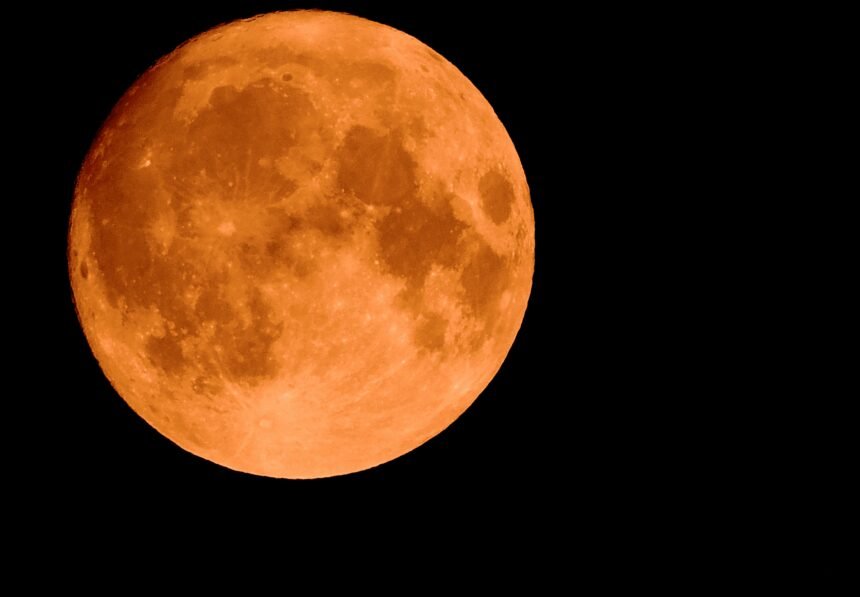
Have you looked up at the night sky and wondered why the moon is orange tonight? You’re not alone. Many people across the United States notice that the moon sometimes appears orange, amber, or even reddish instead of its usual pale white glow. This striking color can feel mysterious, but the science behind it is fascinating and easy to understand.
In this article, we’ll explore why the moon looks orange, what it means when the moon is low on the horizon, and whether the orange color is connected to specific dates like 2026. Everything here is updated, accurate, and written to help everyday readers make sense of what they’re seeing in the sky.
Why Is the Moon Orange Tonight?
The most common reason the moon appears orange has to do with Earth’s atmosphere. When moonlight travels through the atmosphere, it interacts with air molecules, dust, and particles before reaching your eyes.
Shorter wavelengths of light (blue and violet) scatter easily, while longer wavelengths (red and orange) travel more directly. This process is called Rayleigh scattering, the same phenomenon that makes sunsets appear red or orange.
When conditions are right, the moon takes on those warm tones as well.
Why the Moon Is Orange Tonight When It’s Low in the Sky
The Horizon Effect Explained
If you’re asking why the moon is low and orange tonight, the answer lies in how much atmosphere the moonlight must pass through.
When the moon is close to the horizon:
- Its light travels through more of Earth’s atmosphere
- More blue light is scattered away
- Orange and red wavelengths dominate
This is why the moon often looks orange during moonrise and moonset, especially in wide-open areas like deserts, plains, or coastal regions in the U.S.
Visual Illusion Makes It More Dramatic
When the moon is low, buildings, trees, and mountains give your brain a sense of scale. This makes the moon appear larger and more colorful, even though its actual size and brightness haven’t changed.
Why Is the Moon So Orange Tonight Compared to Other Nights?
Some nights, the moon looks noticeably deeper orange than usual. Several environmental factors can intensify this effect:
Air Pollution and Smoke
Wildfires, urban pollution, or industrial haze can increase the amount of particles in the air. These particles filter moonlight more aggressively, enhancing orange and red tones. In recent years, wildfire smoke has been a major reason Americans notice dramatic moon colors.
Dust and Sand in the Atmosphere
Dust from deserts—even from as far away as the Sahara—can travel across the Atlantic and affect skies in parts of the United States. When this dust is present, the moon may appear darker and more copper-colored.
High Humidity or Haze
Moisture in the air scatters light differently and can soften the moon’s brightness, giving it a warm orange or amber appearance.
Does the Moon’s Phase Affect Its Color?
Full Moon vs. Crescent Moon
The moon’s phase doesn’t directly cause the orange color, but it can influence how noticeable it is.
- A full moon is brighter, so its color is easier to see
- A crescent moon may look orange near the horizon but fade faster as it rises
The color change is more about position and atmospheric conditions than the moon’s phase.
Why Is the Moon Orange Tonight in 2026?
Many people search for why is the moon orange tonight 2026, wondering if specific astronomical events are involved. In most cases, the explanation remains the same year after year.
However, in 2026, skywatchers may notice more frequent orange moons due to:
- Increased wildfire seasons in North America
- More atmospheric dust from climate-related events
- Popular lunar events like supermoons drawing attention to moonrise colors
A supermoon occurs when the moon is closer to Earth than usual. While it doesn’t cause the orange color, it can make the moon appear larger and brighter, making its color more noticeable near the horizon.
Is an Orange Moon a Sign of Something Unusual?
Not a Warning or Omen
An orange moon is completely natural and not a sign of danger, weather disasters, or cosmic events. It does not indicate changes in gravity, earthquakes, or solar activity.
Not a Lunar Eclipse (Usually)
A lunar eclipse can make the moon appear red or copper-colored, often called a “blood moon.” However, eclipses are scheduled events and last for a limited time. If there’s no eclipse happening, the orange color is atmospheric.
Best Times and Places to See an Orange Moon in the U.S.
Ideal Viewing Conditions
You’re most likely to see an orange moon when:
- The moon is just rising or setting
- The sky is slightly hazy
- You’re in an area with a clear view of the horizon
Popular Viewing Locations
- Coastal areas
- Deserts and open plains
- Rural landscapes with low light pollution
Cities can still offer great views, especially if pollution or humidity enhances the color.
Why the Moon Turns White Again as It Rises
As the moon climbs higher into the sky, its light passes through less atmosphere. With fewer particles to scatter the blue wavelengths, the moon gradually returns to its familiar white or pale yellow appearance.
This transition can happen within minutes, which is why orange moons are often short-lived but memorable.
Frequently Asked Questions About Orange Moons
Is the moon actually changing color?
No. The moon’s surface stays the same color. The change happens because of how light travels through Earth’s atmosphere.
Can my eyes be tricking me?
Partly. Human perception, contrast with the dark sky, and nearby objects all influence how color is perceived.
Does weather affect moon color?
Yes. Smoke, dust, humidity, and pollution all play a role in making the moon appear orange.
Final Thoughts: Enjoy the View
If you’re wondering why the moon is orange tonight, you’re witnessing a beautiful interaction between space and Earth’s atmosphere. It’s a reminder that even familiar objects can surprise us under the right conditions.
The next time you see an orange moon rising over the horizon, take a moment to enjoy it. These fleeting moments connect us to the natural world and the vast universe beyond.
Whether it’s tonight, next month, or sometime in 2026, an orange moon is always worth looking up for.